Posts RSS Comments RSS 190 Posts and 212 Comments till now

Archive for the 'Shame' Category

Self-injury Report

957439_b59d5c913f.jpgFrom the blog of “Random Thoughts of Self” I found a link to a British Study of Self-Harm called “Truth Hurts.” I also found a nice little image and blurb on the left side of that blog. The blurb said: “I want to be free… an attempt to relieve pain rather than inflict it…” which is IMO right on target when it comes to self-injury (Read “My Take on Self-Injury” to see why).

I recently  I had a member of my email list post a message thatsaid something to the effect of “these people (with BPD) have to punish themselves” (with self-injury).Of cours, I couldn’t disagree more. More often than not, it’s about relieving pain, not causing it.BTW, I don’t self-injure, but my wife’s self-injury was my introduction to BPD.

Why Love is Not Enough

A comment on the title of my book, When Love is Not Enough. I’ve had several people say the book is perfectly titled and others say they don’t like the title. I decided to title it that because I believe that you need more than love to help someone with BPD and to help yourself. The problem with love is that saying “I love you” to someone with BPD can be invalidating. Saying “I’m proud of you” can be even more invalidating. And saying “You can do it” even more so. Let me explain.

Validation is about the other person’s emotions (the BP). It is not about you and your feelings. The statements of “I love you” or “I’m proud” of you are about you. A person with BP needs to learn that their emotions are normal and that everyone feels that way from time-to-time. If they feel weird or broken, healing cannot begin. In fact, the likelihood of poor (even suicidal) behavior follows those feelings. A simple of expression of your love for them could spiral into a session of self-hate. If you say, “I love you” in response to their poor self-image, a likely reaction (in their minds) is “then you’re stupid, because I don’t love me.” When someone feels like they are not able to cope, telling them they CAN cope breeds mistrust. In other words, if you express positive feelings or “positive mental attitude” statements, they are likely to not trust you, because, on the inside, they believe they CAN’T do it, and you’re not seeing their feelings for what they are.

So, love is NOT enough. What you need is skill. In the book I try to teach the skill (through attitudes and tools) necessary to start the healing – for the BP and for you.

Paranoia, Shame and Judgment Sensitivity

My wife has recently been really paranoid that the local moms don’t like her. She thinks that since they will sometimes not let their children come over to our house and play with my son that it means that they don’t trust her. OK, to be totally frank, my wife has been investigated by CPS twice. Once because of a DUI and once because she was over-medicated and went over to a judgmental woman’s house to pick up our children. The woman thought my wife was acting weird and reported her to CPS.

I think that many BP’s get paranoid about their self-image with other people. The combo of fear of judgment - which they perceive as judgment of their emotions and therefore judgment of their SELF mixes with the shame they feel about their self. Am I off-base here?

My wife has told me she has felt shameful about “the way she is” for years. Does that lead to personalization and thus to paranoia?

What do you think?

BPD and Lying - again…

I believe there are several basic motivations to lie when you have BPD. There are also two types of lies: by admission (by telling) and by omission (by not telling). Both types are a problem with someone with BPD. The motivations for telling a lie (or omitting truth) by someone with BPD are as follows:

1.    When it is more painful to admit or tell the truth.
2.    When she wants the other person to think “better” of her than she thinks of herself.
3.    To avoid the judgment of the other person or judgment of herself.
4.    When she can’t see the “truth” because of emotional reasoning brought on by the refractory period of the emotion felt. In other words, when feelings = facts.

The first three of these factors play a role in the lies of someone with BPD and they are often inter-related. If the person to whom the lie is told is likely to judge the person with BPD as “bad” or “deficient,” the expectation of disapproval triggers first rejection sensitivity and then shame, because the person with BPD actually feels deep inside that, if she admits the truth, the other person will “find out” that she is a “bad person” and reject her fully. The last motivation is “emotional reasoning.”

I bring up these motivations not to “let liars off the hook” but to point out something: a person with BPD does not live in the same “reality” as you (the Non) do. Your truth is informed by what you see, hear, experience and what you believe about those inputs. A person with BPD is most often informed by her feelings about the experiences. These feelings can be misaligned with the facts and, as Paul Ekman notes in Emotions Revealed, a person overcome with strong emotions “cannot incorporate information that does not fit, maintain or justify the emotion.” In effect the original lies can be motivated by the inability to see information that doesn’t support the feelings. When someone is emotionally dysregulated, she just can’t see the truth if it doesn’t match what she is feeling.

In effect, she is not really “lying,” but merely pointing out “facts” (or generating them) that support her overwhelming emotion about the situation. The subsequent lies, which are used to “cover up” or support the emotional reasoning, are typically done for one of the first three motivations, particularly the idea that you would think of her as less of a person (and deservedly so) if it was revealed that she lied in the first place. I think there can be some argument about whether deep-down a person with BPD really believes the original lie (or any of those generated by motivation number four) when she exits the prolonged refractory period. My suspicion is that deep down a person with BPD is more concerned with the pain and shame the revelation of the lie will cause her than with repairing, rather than repeating, the lie.

While it is useful to know the motivations behind the lies, it still doesn’t make the lies any less hurtful. Being lied to is a painful and hateful experience for the Non. It destroys trust and personal integrity and leads to suspicion and paranoia. When someone specifically lies to you (by admission) or is secretive (by omission), you end up feeling angry, saddened and disconnected from your loved one with BPD. It is a confusing, embarrassing and painful experience.

Each of the motivations can be removed by:
Number 1: Pain management, distress tolerance (when the pain can’t be removed) and self-soothing
Number 2: Self-acceptance*
Number 3: Self-acceptance and developing the ability to tolerate judgment
Number 4: Emotional modulation

* a quick note on Number 2. I have known at least 3 borderlines rather well in my life. I have also known about 3 more peripherally (and of the 6 - not including my wife - 5 are female). But the 3 that I have known well (2 women and 1 man), ALL of them used motivation #2 to generate seemingly outlandish lies. Sometimes, each of them would have to “own up” to the lies and that was a painful experience I’m sure. I know if I every have to own up to lies, it is painful for me. I can only imagine how painful it is for someone with as much shame as a borderline feels.

My take on Self-Injury

Self-injury can come in many forms and includes cutting oneself with razors or knives, burning oneself with cigarettes or matches, pulling out clumps of hair and picking at oneself (especially the nails and/or cheek) until blood is produced. Self-injury is one of the most difficult behaviors for the loved one to understand. In the case of BPD, self-injury is done for the purpose of pain relief, not to “get attention” or to manipulate the loved one. Most self-injury is done in private and done without the knowledge of the loved one. Occasionally, the self-injury cannot be covered-up (i.e. the blood and/or scars are apparent or the hair is missing in large area of the head) and others notice the activities. The actions themselves are fraught with shame and may lead to even more shame for the person.

In the hospital, ER doctors take a dim view of those who injure themselves, and a person who engages in self-injury will often avoid hospitals to avoid the inevitable judgment and lack of compassion these doctors (and nurses) will exhibit toward them. Most people in the medical community – doctors and nurses included – have little or no training in dealing with people who self-injure and, for the most part, feel that they want to deal with other patients first, since the patient caused their own issue. Also, they will likely send the person to the psyche ward, which is usually not effective because the person was using a tool for pain reduction. They’re not crazy, just engaging in a practice that has significant negative consequences.

What is important for a loved one to understand is that self-injury has a purpose and that purpose is usually pain relief, not self-punishment or attention-getting. The person who engages in this behavior may feel and describe a deep “itch” inside their body that they have to rid themselves of immediately.

While self-injury can provide relief from pain (through the release of endorphins, or natural, pain-killing substances within the brain), it can have risks and negative consequences. These include embarrassment, scars, infection and, in some cases, death. For the loved one,  focus on the negative consequences of the behavior, rather than focusing on whether cutting is bad or wrong. Judging the behavior as bad or wrong will just create more shame.

Update! A new version of my book is out!

I have created a new version of my book, which fixes some typos and clarifies some points. I also was able to drop the price! It’s now $19.95, instead of $20.95. Since it got 3 pages shorter, I will be able to make a decent profit at the lower price. That price anticipates the cost it will have to be when I get it on Amazon (shortly).

Anyway, I suggest you check out the preview, and pick up a copy (shameless self-promotion). You can see the preview or buy the printed or downloadable version of When Love is Not Enough at Lulu.com.

If you are one of my readers with BPD, I would suggest getting a copy for anyone with whom you’d like to have an on-going relationship. Why? Because this book teaches a “Non-BP” the attitudes and tools to be more effective and more validating toward someone with BPD. The purpose is to rebuild the lines of communication. Like I said in a previous post (or comment), if I can quote myself here:

The BP/Non-BP relationship seems to me to be one of misunderstanding and miscommunication. I hope that I can help each learn the language of the other. And I agree most public awareness is important - BUT it has to be the right kind of awareness - not the “stay away from these people” or “these people are evil” kind.

Enjoy!

The Book is Out! When Love is Not Enough…

When Love is Not EnoughAt long last (about six months of work and 2 1/2 years of research, experimentation and practice), my first book When Love is Not Enough (WLINE) has been published!

This book is a quick-start, how-to guide for Non-BPs. It spells out step-by-step WHAT to do in your relationship with someone with Borderline Personality Disorder (or BPD traits) and HOW to do it. Unlike other books on this subject (you guys probably know which ones I’m talking about), WLINE tells EXACTLY what to do. Through the use of attitudes and tools, WLINE can help you build mastery over your relationship, regain control of your life and develop a deeper understanding of your BP loved one. I highly recommend it (if I do say so myself).

Although WLINE is fairly short (about 185 pages), it is packed full insights, advice and practical skills to help you understand your BP and to reestablish the lines of communication. If you are a Non-BP, WLINE is an essential resource. If you have BPD, I would recommend that you recommend WLINE to your family members, partners and friends (that is, if they are aware of your disorder). WLINE helps to build the bridge of understanding, serenity and effective communication between Nons and BPs.

It could be the most effective $20.95 you’ve ever spent.

If you’d like to buy a printed or eBook copy of WLINE, I am selling the book through Lulu:

Buy the Book!

A note on the title… I kicked around a number of titles before settling on this one. It is my feeling that most Nons don’t understand that, in addition to love, they have to develop ATTITUDES and SKILLS to be effective in their relationship with a BP. WLINE actually innumerates these attitudes and skills and provides detailed examples of how to apply them. With a commitment to the relationship, application of the concepts in the book and PRACTICE, a Non can learn what IS enough in their relationship with a BP.

Why Pete Doherty has jumped to the front of the line for BPD celebs

petedoherty.jpgOK, well, the other day I posted on how Pete Doherty has jumped to the top of my Celebrities with Borderline Personality Disorder (possibly, but not for sure) list. Why? Well, he just released a series of paintings done in his own blood. Let’s examine the other “evidence” of possible BPD….

(For those of you who don’t know who Pete Doherty is: he’s the lead singer of two British bands: Babyshambles and the Libertines. He dated Kate Moss and he is a regular in the tabloids in London for his erratic and criminal behavior.)

Self-Harm

Painting in one’s own blood seems to indicate self-harm. Here’s another article about Doherty’s self-harm.

Quotes from the self-harm article:

Graphic footage of rock star Pete Doherty deliberately harming himself will not appear in a forthcoming fly-on-the-wall documentary about the former Libertines’ singer, as had been feared by mental health charities.

The scenes of Doherty cutting himself with a broken bottle feature in a rough edit of the documentary, to be shown on BBC3 on Sunday 28 August. The images of Doherty slashing his chest, taken from the edit, were leaked to the national press last week, raising concerns about his mental health.

Substance Abuse

Well, duh… He’s been put in jail numerous times for drug offenses, including heroin and cocaine abuse.

Quotes:

He appeared at Ealing Magistrates’ Court to face charges of possessing heroin and cocaine.

The 26-year-old was arrested by police after he was spotted driving a speeding car in west London on 30 November.

The former Libertines singer has continually been in the headlines over his drug abuse and his relationship with model Kate Moss.

He is due to reappear at Ealing Magistrates Court on 8 February.

The prosecution said police pulled Mr Doherty over after he was spotted speeding and officers said he had a glazed look.

He was found to have three packets of heroin, with a weight of 0.875gm (0.03oz), and one packet containing 0.234gm (0.008oz) cocaine.

Inappropriate Anger

More quotes:

Babyshambles singer Pete Doherty has been fined £750 after he admitted assaulting a BBC reporter in March.

The star pleaded guilty at Thames Magistrates’ Court to kicking a microphone out of her hand outside the same court after a separate appearance.

In a statement, the 27-year-old said: “If I hurt this lady I’m sorry.”

The star, who is currently being treated for drug addiction, was also ordered to pay £250 compensation and another £200 in court costs.

Painful hand

He had previously pleaded not guilty to a charge of assault by beating after he kicked out at Radio 1 Newsbeat’s Trudi Barber.

His defence lawyer, Sean Curran, said Doherty changed his plea after watching television footage of the attack.

Indentity Issues

He’s turning to Islam? I wonder how long that will last.

Quotes:

One of Doherty’s friends said: “He’s been reading the Quran since he went into segregation. He’s got a lot of Muslim friends and they’ve been on at him for ages to study it. Now he’s on his own and he’s got time on his hands to study it.

“I’m surprised how much it has calmed him down as he was very on the edge inside. He definitely seems more chilled. He’s lapping it up and really interested in it. I think it’s helping him in there.”

Doherty has been having a difficult time since his 14-week sentence began for violating probation by taking drugs.

Volatile Relationships

_42461439_doherty_body_ap.jpgThe UK hottest couple, Pete Doherty and Kate Moss, split up, after the beautiful supermodel dumped Pete, arguing she cannot stand his way of life anymore, always worrying about him.

On July 22, 2005, Pete Doherty was involved into
a street fight. British newspapers The Sun and Daily Mirror reports that Pete and musician friend Alan Wass fought with a group of Somali youths after they shouted “crackhead” at him.

Farid Khan of Supersave store in Camden Town, said: “The singer ran in pursed by six man. There was a big fight. We got them out but they hurled a brick at the door.”

Kate reportedly told friends: “I can’t go on spending day and night worrying about Pete. He would disappear without a word and I would not hear from him for days. He has to change his lifestyle. Until that happens we are finished.”

Sexual Confusion

DOHERTY: ‘I WAS A GAY RENT BOY AND DRUG DEALER’

Troubled rocker PETE DOHERTY has shocked fans by boasting he worked as a homosexual prostitute and drug dealer to fuel his drug addictions, before he shot to fame in his former band THE LIBERTINES.

The wild singer confesses he was so desperate for money to fund his cocaine and heroin habits, he worked as a rent boy and once robbed a gay client after tying him up at his home.

Dangerous Driving

Babyshambles singer Pete Doherty has been fined £300 and disqualified from driving for two months.

The 27-year-old admitted two charges of driving without insurance or a licence at Thames Magistrates Court in London.

District Judge Jane McIvor warned the singer that he faces jail if he drives without a licence again.

The rock star was arrested in November 2006 by officers who spotted him driving his Jaguar erratically near his east London home.

Shame

So you’ve got this support act, some posh bloke with a discomfited smile, slowly eating himself from the inside out from pure embarrassment. One guy with a guitar strumming idle fancies like ‘The Blue Ridge Mountains Of Dakota’, incapable of holding a note or playing a tune, and, what’s worse, he clearly hates himself for it. Pretty soon, he’ll be dead. And then he’s joined by a nonchalant Doherty in trenchcoat and hat. The place breaks out into hysteria. I’m blinded by about twenty camera phones flashing, then I’m nearly sucked under by the wave surging forward. Even Doherty, the boy in the bubble, advises everyone to move back because there’s a girl in the front whose eyes are bulging.

Suicide Attempts

Pete Doherty tried to kill himself in rehab after discovering that Kate Moss was dating a new man. British tabloids tattled that the ‘Babyshambles’ singer downed an entire bottle of pills-he just ended up making himself ill.

“He saw an opportunity to take an overdose and took it. He told me he didn’t know what the pills were but thought ‘fuck it’ and took them all,” says a NOW insider.

“He doesn’t care what drugs do to him—in fact, he likes finding out.”

“To begin with Kate was ringing him up all the time, concerned for his well-being.”

“But when Pete started to quiz her about the new guy, she was evasive and it got to him. She messed with his head.”

Impulsive Behavior

Anthony Thornton, the reviews editor of NME and an authority on The Libertines, said: ‘Pete is at a lower point than he was a year ago. He’s hit depths he didn’t even know existed. He’s not aware of how bad a state he’s in, and the drugs make it worse. He’s incredibly impulsive, he doesn’t take on responsibilities, he’s unreliable and likely to do himself harm.

Unsafe Sexual Behavior

I think anyone who was a male prostitute qualifies in this regard.

So, ole’ Pete hit just about all the categories that I applied to other celebrites. While I am not a doctor and can’t officially diagnose anyone… Pete Doherty looks suspiciously like he may have Borderline Personality Disorder (or something very close to it). And everyone, you will notice that I used mainly news articles in this analysis (with a bit of blogging, didn’t have time to look up interviews for shame - although I’ve been told he says he hates himself and he is a bad person).

Here’s his Wikipedia entry.

Role of Shame in BPD

Here is an excellent article about shame and BPD:

http://www.soulselfhelp.on.ca/drm10shame.html

The Role of Shame in BPD
© Dr. Richard Moskovitz

Can you discuss shame? Is shame not one of the most significant core wounds that must be healed in order to recover from BPD?

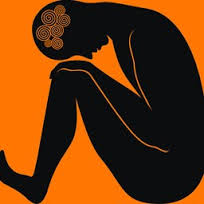
Shame is fundamental to the experience of anyone with BPD and is the most crucial emotion that must beShame is about who you are addressed if recovery is to occur. Shame is often confused with guilt, but these emotions have very different meanings. Shame is about who we are, while guilt is about what we do. Shame therefore reflects more lasting beliefs about the self than guilt. When we feel guilt, we expect retribution for what we’ve done. When we feel shame, we expect contempt from others and feel contempt for ourselves.

Shame is connected with a wealth of negative self-beliefs that may include fundamental assumptions of defectiveness, the belief that one is helpless to survive alone, beliefs about physical defectiveness (”I am fat, deformed, repulsive to others), mental defectiveness (I am stupid, incompetent, inarticulate), or sexual defectiveness, and the belief that one is unworthy of the love and attention of others.

We feel shame about anything about ourselves that we would prefer others not to see. The body language of shame is about being invisible or not acknowledging being seen by others. We become small in posture by slouching or turning away. We avert our gaze from that of others, which is reminiscent of a baby covering its own eyes and imagining that it has become invisible to others. As adults, however, failing to meet another’s gaze is also a sign of submission.

We also feel shame whenever we fall short of our own expectations of ourselves, however unrealistic they may be. Impossible goals, such as the total eradication of body fat, inevitably lead to deepening shame, which in turn may be reflected in an increasingly distorted self or body image. This is the cycle of shame that fuels the compulsive self-starvation of anorexia nervosa. Shame is therefore connected with the fantasy of how we imagine we are supposed to be and obstructs our vision of who we really are.

While shame has many roots, it is a natural consequence of abuse and neglect. What all forms of abuse have in common is the contempt that an abuser has for a victim. The deeper pain of being abused is the shame that derives from being an object of contempt. Many abusers show their contempt explicitly in the form of degrading words, but all abusers show contempt by their assumption that their victim’s primary role is as an instrument for their gratification. Shame in turn results in submissiveness that tends to perpetuate the cycle of abuse.

Dr. Donald Nathanson has pioneered the study of shame and its relationship to the psychotherapeutic process. He defines four categories of learned responses to shame, which he visualizes as the four points on a compass. On one axis lies “Withdrawal” at one pole and “Avoidance” at the other. On the other axis lie “Attack self” and “Attack others.”

“Withdrawal” behaviors include various forms of hiding from others, ranging from averting ones eyes and maintaining silence in the presence of others to reclusiveness and flight. Withdrawal can lead to isolation and feelings of abandonment, confirming the belief that we are unworthy of the company of others and therefore reinforcing shame.

“Attacking self” includes a repertoire of behaviors that are designed to protect us from abandonment at all costs. These are self-negating, submissive gestures that acknowledge the superior power of another, whose presence has become important to us. This can also contribute to the cycle of abuse.

“Avoidance” includes all the behaviors that are designed to keep from feeling the shame. This ranges from the use of drugs and alcohol to obliterate feeling to the distractions of sexual indulgence, materialism, and vanity. Avoidant behaviors include a variety of things we do to cover up the defects that we imagine others see in us. They are often cosmetic in quality and serve to distract both ourselves and others from these defects.

“Attacking others” includes a repertoire of desperate behaviors that serve to belittle others as a last ditch attempt to rescue self-esteem by feeling bigger at another’s expense. The attacks may come in words or actions. These behaviors inevitably distance us from others, again raising the threat of abandonment. These behaviors also result in shaming others and pass the wounds along.

These four kinds of responses to shame are all intricately interrelated, are self-defeating, and therefore perpetuate the cycle of shame. They are behind the many impulses with which people with BPD must struggle. They are connected with the terror of abandonment that characterizes BPD as well as with the difficulty that people with BPD have in achieving intimacy.

Rejection Sensitivity and BPD

Rejection Sensitivity is the tendency to “anxiously expect, readily perceive and overreact to social rejection.” [Downey & Feldman, 1996, quoted from Baldwin, Mark, “Interpersonal Cognition”, 2005, page 83] Someone with BPD will almost certainly have this feature.

Have you ever had your loved one ask you: “Are you mad at me?” Or has your loved one asked you: “Do you like me?” over and over again. Or have they said, “You could do so much better than me. Why are you even with me?”

These questions and others like them are indications that your loved one is suffering from rejection sensitivity. Someone with rejection sensitivity will also avoid tasks, meetings or other social interactions if there is any sense of rejection implied. They are unlikely to initiate social interaction or close personal contact. Often when forced to be in social situations, someone with BPD will constantly scan other people’s reactions for disapproval or rejection. They might rely on others from whom the signals of possible rejection are less strong. In other words, they might ask you to do things for them (like make phone calls or attend meetings at school), rather than risk social rejection themselves. This adaptation to rejection sensitivity is avoidance.

When actual rejection occurs or is perceived by someone with this feature, especially when the rejection originates with someone that the person with BPD is important to them, rage and even violence can occur. The person with BPD who perceives that he or she has been rejected by a significant person (one from which they are less likely to expect rejection), the person with BPD “becomes hostile not in general but specifically in reaction to potential rejection from a significant or important person.” [Miscal, 1996, quoted from Hamel, John & Nichols, Tonia, “Family Interventions in Domestic Violence”, page 126]

This feature is closely related to shame and to the fear of judgment. In both cases a person with BPD will judge themselves harshly because of the shame (they are a bad person) and will reject themselves (I don’t deserve acceptance). Additionally (and perhaps ironically), they may lash out, rage at or abuse people who do offer them acceptance, because they feel, based on their deep seated feelings of deserved rejection, they don’t deserve acceptance. They expect rejection because they deserve rejection. In this way, the feelings around acceptance versus rejection are a “no win” situation for you – if you reject the person with BPD, they get angry, if you accept them, they may judge you as “stupid for accepting someone as bad as me.”

Next »

Close
E-mail It

Powered by WebRing.