A free eBook – 4X4 for Nons
|
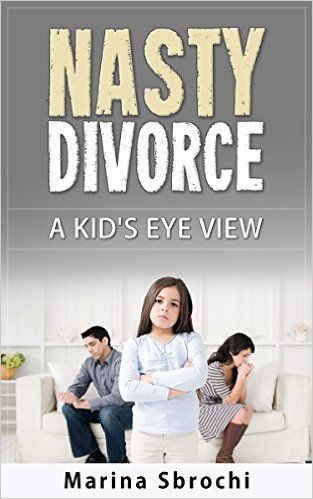
Children’s temper tantrums are widely seen as many things: the cause of profound helplessness among parents; a source of dread for airline passengers stuck next to a young family; a nightmare for teachers. But until recently, they had not been considered a legitimate subject for science.
Now research suggests that, beneath all the screams and kicking and shouting, lies a phenomenon that is entirely amenable to scientific dissection. Tantrums turn out to have a pattern and rhythm to them. Once understood, researchers say, this pattern can help parents, teachers and even hapless bystanders respond more effectively to temper tantrums — and help clinicians tell the difference between ordinary tantrums, which are a normal part of a child’s development, and those that may be warning signals of an underlying disorder.
Read the entire story or hear the audio
What I found illustrative of this story was the first comment… An excerpt:
This was the worst piece of parenting psycho-babble I’ve ever heard. Explain to me what the child has learned from this besides how to manipulate his or her parents into getting his or her own way? It’s all well and good to study and understand the dynamics of a temper tantrum, but as parents, our responsibility is to help our children become civilized human beings. In our household, tantrums were an automatic “no” for whatever the child was asking for and, if one of my kids had slammed a chair against a wall, that child would have been in his room. Amazingly, my children had very few tantrums and none of them escalated to this level. Not only did they learn that this behavior is unacceptable, they also learned how to ask for what they wanted in a respectful and polite manner and how to negotiate if they really, really wanted something.
I’m sure it’s wonderful to have judgmental atttitudes about others’ kids behavior, but what it illustrates to me is that most people, especially parents, don’t understand the basic mechanics of emotions. And don’t know how to properly react to emotional outbursts. To me, this comment just describes an “invalidating environment”. Kids are not trying to manipulate the parents during a truly emotional outburst. No, their reacting just like their emotions inform them (anger/sadness) and behaving in a perfectly natural way. If you deal with the emotions properly, this behavior will not occur.
They might as well call it “childhood borderline”:
latimes.com/health/la-he-child-temper-20111010,0,3234089.story
latimes.com
Child mental disorders: New diagnosis or another dilemma?
A proposed new diagnosis for outbursts and tantrums sparks debate in the psychiatric community. Would it help parents desperate for answers, or just add to the confusion?
By Shari Roan, Los Angeles Times
October 10, 2011
advertisement
The final straw for Carolyn Alves came last fall when she tried to help her daughter Cecelia dress for kindergarten.
The volatile 6-year-old had worked herself into a frenzy as she tried on outfit after outfit, rejecting each as unacceptable. The tantrum at full bore, she scooped up a pile of clothes and hurled them at the front door of the family’s Spanish-style bungalow in Glendale.
The clock ticked past the school’s 8 a.m. bell. Alves pulled her wailing child into her arms and held her on the couch. After several minutes, Cecelia stopped, took a breath and announced that she was ready to go to school.
“It was like watching someone who was having a mental breakdown,” Alves said. Then “a switch went off and she went back to being normal.”
Alves and her husband, Marcos, have consulted five doctors and therapists in the last four years. Cecelia has been diagnosed with a smorgasbord of psychiatric disorders — including the controversial diagnosis of child bipolar disorder — in addition to being called a normal kid.
Experts in pediatric mental health readily acknowledge that their failure to pinpoint the problem with children like Cecelia makes a difficult situation worse. And some of them are pressing for an unconventional solution: a new diagnostic category called disruptive mood dysregulation disorder, or DMDD.
Creating a diagnosis is considered a radical step in mental health circles, and the proposal has sparked much debate. The controversy underscores the fact that therapists simply don’t know what to make of the estimated 3% of children in the U.S. who suffer from severe irritability and emotional outbursts.
“Everyone wishes we could have a genetic test or a blood test” to determine which disorder a child has, said Erik Parens, senior research scholar at the Hastings Center, a bioethics think tank in Garrison, N.Y. “Unfortunately, nature doesn’t work the way we wish.”
As a result, parents may be told their children have conduct disorder, oppositional defiant disorder, attention deficit hyperactive disorder, depression or bipolar disorder — if they get a diagnosis at all.
Adding disruptive mood dysregulation disorder to the list of ailments doctors may consider would reduce the number of children misdiagnosed with bipolar disorder and treated with powerful psychiatric medications, proponents say. And, they add, improving treatment for children who have problems with mood and temper would reduce the number of children at risk of falling through the cracks in school and society.
But critics counter there is no scientific evidence to warrant recognition of a new mental disorder.
As doctors quarrel, parents like Alves struggle with the lack of medical options.
“I feel in limbo right now,” Alves said one afternoon, cuddling her painfully shy daughter. “Having a diagnosis would help me know what direction to take.”
Psychiatrists sharpened their interest in child mood problems several years ago in response to criticism over the number of children diagnosed with bipolar disorder — a debilitating condition in which periods of depression alternate with euphoria or elevated moods. It is considered incurable, although symptoms may be treated with drugs that carry serious side effects. Continue reading Sounds like Childhood Borderline: new diagnostic category called disruptive mood dysregulation disorder, or DMDD →
While Borderline Personality Disorder is not generally diagnosed in children, many with the disorder feel that even as a child, there were symptoms and signs of the disorder. When my wife and I had an educational assessment done of our emotionally- sensitive daughter when she was eight years old, the “social and emotional functioning” section of the assessment sounded very much like childhood borderline. After meeting numerous people with Borderline Personality Disorder and their families, I have identified several signs that a parent can be on the look-out for. These are by no means a diagnostic guide, as I am not qualified to diagnose any mental disorder and there is no diagnostic guide for BPD in children. Yet, these are some of the common traits of children who, later in life, developed Borderline Personality Disorder. Certainly, a person doesn’t have to have all of them or, even if he/she does have all of them, it’s not a foregone conclusion that he/she will develop BPD.
- Physical sensitivity to the sensory input. This sensitivity may include the inability to tolerate loud environments, to wear “scratchy” clothing or expressions of disgust with smells that others are not sensitive to.
- Inconsolable as a baby or toddler. The “borderline” child is more likely to exhibit more distress than his/her siblings and have long crying jags and/or temper tantrums.
- Migraine headaches and/or other physical, chronic pain. Pain is a common feature of BPD. This pain may show up in childhood as a migraine or some other form of physical pain.
- Inability to integrate the meaning emotional experiences. This represents at some level a “failure to mentalize” on the part of the child. He/she may exhibit an inability to understand the emotions of others as displayed in their faces and/or through their actions.
- Intense personalization of events. The belief that all things are “about them” or “about their feelings,” particularly social events and situations.
- Anxiety leading to avoidant behavior. This can represent itself through avoiding social situations (e.g. “because those people are mean”) and or avoiding academic tasks.
- Intense emotional reactions to frustration. Temper tantrums and the inability to tolerate frustrating emotional situations, particular social ones. This can manifest itself in violence or in bridge-burning.
- Shame. The feeling that he/she is not a worthy person and “deserves” to get hurt. He/she may also “run away” from friendships or social situations that are shame-inducing.
- Not feeling “normal”. Young people with BPD seem to feel at some level “something is wrong with me” or “I’m not normal”. The feeling of “strangeness” seems to be a theme in young people with BPD.
- Expectations of doom. The concern that at any time the world is going to come down around their ears, especially socially. Sometimes there is paranoia around this subject, as if their friends are really “fooling” them into believing they’re liked. At any time, the borderline child could be rejected and ostracized.
While this is probably not a completely exhaustive list of the traits of the borderline child, these are the common traits I’ve experienced and been told. It is important for parents to identify an “emotionally vulnerable” child as early as possible. The road of an adolescent and young adult borderline can be dangerous, painful and even deadly. Borderlines are 400 times more likely to commit suicide than the general population. Based on the non-scientific polls conducted on my website, 70-75% of borderlines abuse substances, engage in self-injury and attempt suicide at least once in their lives.
Reinforcement, especially positive reinforcement, is a powerful teaching tool. You could more accurately say “training” tool. You have probably used reinforcement in your life without even realizing it. Consider potty training. If you have ever potty-trained (or as many modern texts call it “toilet taught”) a toddler, you know how difficult that task can be. However, all kids eventually learn to use the potty – I don’t know of a case of a kid going into high school without knowing how to use the potty.
Potty training provides an excellent example of positive reinforcement and the ignoring of “backsliding.” That is the essence of this tool. When you teach a child to use the potty, you make a BIG positive deal about it when it is successful. The first time you see the poop in the potty, what happens? Typically, the parent praises the child, positively reinforcing the behavior in a way that is out-of-proportion with the accomplishment. You may say, “Yeah! You did it! That’s fantastic! Good Job!” and clap your hands and cheer. You also will tend to do it within seconds of the completed behavior. That is where positive reinforcement differs with general praise. Praise can be given much after the fact and can be bestowed for a number of reasons, including character traits. That is, you could say, “Wow, you are so smart” after your child receives a 100% grade on a math test. That is praise. (Although I’m not sure it is effective, but that is not the topic at hand). Positive reinforcement is for behaviors and should occur right when the behavior is completed. That is how animals are trained. The positive reinforcement (feeding, for example) occurs within seconds of the completed behavior so that the two can be connected in the mind of the animal. Continue reading Reinforcement and “Behaving Better” →
| List Price: |
$24.95 USD |
| New From: |
$15.47 In Stock |
| Used from: |
$11.49 In Stock |
|
|
|
Overcoming Borderline Personality Disorder by Valerie Porr is perhaps the most up-to-date and complete book for family members of people with BPD published to date. When I read the book, I couldn’t help but think that Ms. Porr had the therapists and mental health professional more in mind than the family members. It appears as though she is trying to dispel many myths about BPD that exist not only in the family environment but also in the mental health community. This book is steeped in scientific research, including research involving the biological under-pinnings of BPD. It includes many skills for family members from both DBT and mentalization based therapy (MBT). Clearly Ms. Porr is highly respected by the clinical community since many of the leading experts in research and practice in BPD treatment have written blurbs for this book. The book is quite dense and a must read for family members of those with BPD. Yet it might not be the best book to start with because of the complexity of the scientific research, the psychoeducational aspects and the technical details about the various therapies for those with BPD. Still, I highly recommend Overcoming Borderline Personality Disorder.
 Genetics in Borderline Personality Disorder
I was reading an article called “Social cognition in borderline personality disorder: evidence for disturbed recognition of the emotions, thoughts, and intentions of others” and noticed a line in the article that said this: “Thus, in addition to high heritability of BPD (Torgersen et al., 2008), these results argue that environmental factors (e.g., trauma) contribute to disturbed social cognition in BPD. In summary, for the current study we expected PTSD to be a negative predictor of social cognition.” That intrigued me on two levels. One was the “high heritability” part, because often I see comments about BPD and how many people believe that it is mainly caused by childhood trauma (and/or invalidation). In WHINE I state this: As I said earlier, one of the causes of BPD is the “invalidating environment.” Now, it could be that it is not an actual “cause” (and that all the real causes of BPD are biological), but more a reinforcer of BPD. So, the second part of the article that intrigued me was the idea that “we expected PTSD to be a negative predictor of social cognition” – and the discussion and methodology of comorbid PTSD with BPD. What they found was that people with BPD (with or without comorbid PTSD) are less able to understand the intent, thoughts and motivations of social interactions in others – in other words, people with BPD can’t mentalize as well as controls. They also found that this lack of ability is more marked in people with BPD who also have comorbid PTSD. The fact that they mention comorbid PTSD at all is something of a revelation – or perhaps should be to us nons. Many people come to support lists and do research on the Internet and begin their “introduction” of their BPD person with a long list of childhood traumas that explains why the person has BPD. This current research would indicate that PTSD and BPD are clearly two separate disorders and that, while PTSD is a contributor to poorer functioning that BPD alone, BPD is in itself a highly inheritable disorder and biological in nature, yet “reinforced” or made more severe (especially in a social functioning sense) when PTSD is present.
Anyway, this research led me to another scientific study called “Familial Resemblance of Borderline Personality Disorder Features: Genetic or Cultural Transmission?” In which the researchers studied twins, siblings and parents of borderlines to determine the genetic underpinning of BPD or whether the environment and/or cultural influences could have more of an influence on the development of BPD. They found this: “In the present study an extended twin-family design was applied to self-report data of twins (N = 5,017) and their siblings (N = 1,266), parents (N = 3,064) and spouses (N = 939) from 4,015 families, to estimate the effects of additive and non-additive genetic and environmental factors, cultural transmission and non-random mating on individual differences in borderline personality features. Results showed that resemblance among biological relatives could completely be attributed to genetic effects.” and this: “There was no effect of cultural transmission from parents to offspring.”
Recently, in the ATSTP group, we have been discussing the idea that shame/honor-based cultures and whether that environment could be explanatory in some sense of the development of BPD. It appears (at least based on this 2009 study) that the development and transmission of BPD is NOT cultural. It is essentially genetic (mainly “additive”, meaning it is more than one gene involved) and the environment has an effect, yet cultural transmission was not apparent.
They do go on to say this: “Gene by environment interaction implies that genes determine the degree to which an individual is sensitive to an environment. In the presence of gene-environment interaction, individuals with a ‘sensitive’ genotype will be at greater risk of developing BPD if an undesirable environment is present, than individuals with an ‘insensitive’ genotype.” So, basically, although this interaction has not been fully studied, it appears that some sort of “sensitive” genotype is required to develop BPD.
 Lindsay Lohan and BPD?
I read an article today about Lindsay Lohan from Fox News’ Dr. Keith Albow entitled “What Lindsay Lohan’s Parents Stole From Her”. While I can certainly understand Dr. Albow’s point at some level (although mostly I believe it was to attract readers to Fox with a catchy title about Lindsay Lohan’s situation), I have a problem with Dr. Albow’s analysis of Ms. Lohan’s parents. My problem has several facets to it, so you’ll have to bear with me as I go through them. The first part of my problem has to do with the “blaming the parents” aspect of mental health care and the attitude of mental health care professionals. When you take a child with possible BPD or with behavioral issues like Ms. Lohan has reportedly experienced (those include possible theft, substance abuse, sexual orientation confusion, impulsive actions, self-injury, depression, anxiety and the like), the first thing that is assumed about you is that the child has experienced trauma, neglect or abuse by the parents (that is, YOU). Oftentimes this is NOT the case. I have two daughters (fraternal twins) and one of them has emotional regulation issues, the other does not. The environment in which they were raised was essential the same. The thing is, the children are not the same. I know of another individual who has two daughters, two years apart in age, one of which is a drug addict who never attended college and the other has a ph. d. They were also seemingly raised in the same environment. Granted, neither my children nor the daughters of my friend are child stars as Ms. Lohan was. Yet, my problem #1 is blaming the parents. It doesn’t do anything to help Ms. Lohan. In DBT there’s a couple of rules that you learn at the beginning. One of these “rules” (or guidelines) goes something like this: Even though I didn’t cause some of my problems, I still have to be responsible for solving those problems. In other words, even if you lay the cause and responsibly solely at the feet of Ms. Lohan’s parents and what they “stole” from her, it doesn’t function to make Ms. Lohan behave more effectively or feel any better. Instead, now that she is an adult, she will be required to take responsibility for her behavior and learn the skills necessary to function in a more effective manner, regardless of who caused her problems. I want you all to understand though, if she DOES indeed have a mental illness, these problems might be more difficult for her to overcome. That is because IMO (and in the recent opinions of many scientists) there is a biological component to most mental illnesses (including BPD) and, whereas many people with BPD also have comorbid PTSD from trauma and/or abuse/neglect, many do not. I believe that in order to have BPD the biological component must be present. Dr. Marsha Linehan’s bio-social model seems to reflect this. In other words, in the case of my twins and my friend’s daughters, what is different about each of them is their biological system, not the environment. The kids are different biologically. In the case of Ms. Lohan, perhaps she also has a biological feature that would increase the likelihood of impulsive behavior (among other features).
Now this brings me to point #2 which has to do with boundaries and the fuzzy understanding of what boundaries are. Dr. Albow says:
If she’s guilty, she did it for the same reason she illegally used drugs and drove under the influence and—maybe—assaulted an employee at The Betty Ford Center: She had so much stolen from her as a young person, had her boundaries violated so feloniously, that she considers the boundaries of others irrelevant.
Ahh, boundaries! Anytime I mention BPD to anyone who is not steeped in the world of BPD/non-BPD, including and especially therapists, one of the first things out of their mouths is boundaries (after trauma/abuse). This doctor doesn’t understand boundaries and the way that they function. A person like Lindsay Lohan doesn’t have a boundary problem, she has an emotional problem. You could rewrite the first sentence like this:
If she’s guilty, she did it for the same reason she illegally used drugs and drove under the influence and—maybe—assaulted an employee at The Betty Ford Center: she is in a great deal of emotional pain, has issues regulating her emotions, is impulsive and will behave in an “anything to stop the pain” manner. She acts on her emotions and action impulses before she thinks of the consequences.
Her problem is dysphoria and a poor sense of well-being, which in turn leads to impulsive behavior like shoplifting a necklace when you could just afford to buy one.
I don’t want to go into a long discussion of boundaries here. I‘ve talk about boundaries so many times, it gets old. If you understand my view of boundaries and rules and consequences and intent and the differentiation between these important behavioral and mental concepts, you’ll immediately see why I object to the “boundary violation” explanation of Ms. Lohan’s make-up and behavior. No, the problem with Lindsay Lohan is (IMO) dysphoria, poor impulse control, emotional dysregulation and a large amount of emotional pain. That is why she does the drugs, steals things (allegedly), engages in risky behavior, cuts herself, etc. It’s not because she “considers the boundaries of others irrelevant”. That statement just shows me that you, doctor, don’t understand boundaries, despite your status as a mental health professional and a Fox News guy. In fact, it has NOTHING to do with the other’s boundaries or feelings at all. It’s all about her feelings.
My last problem with the article has to do with this statement:
Assault and theft. Lindsay Lohan, I would venture, knows all about those things, very deep inside. And not just because of what she did. No, no. Don’t believe that for a moment. Mostly, this is a story about what was done to her.
No, it’s not a story about what was done to her. I’m sorry, but the problem for Ms. Lohan is two-fold. Firstly, if she does indeed have mental health issues, emotional issues, substance abuse issues, and behavioral issues, it is her responsibility as an adult to address those effectively. The question is not “what was done to her by whom?” – it’s “what does she do about it now?” She’s no longer a child. She must address her behavioral issues with the help of a mental health, substance abuse and/or behavioral health specialist. If she continues to play out the approach that Dr. Albow espouses here – the “I had a f*cked up childhood” approach, she’s going to continue to behave ineffectively. What she’s doing is anything to stop the pain, yet, ironically, it is causing MORE pain for her because she’s behaving in an ineffective manner.
Secondly, like everyone in society, Ms. Lohan has to learn that her behavior has consequences, even unintended ones. Sure, she might have a disorder like BPD in which she would find it difficult NOT to behave impulsively and in a pain-killing way, yet when all that is done, she has to face the consequences of her behavior like everyone else. As I have said in the past, just because you didn’t mean to burn down the house while playing with matches, doesn’t mean the house magically comes back from the ashes. No, the house is still in ashes whether your parents abused/neglected you or you were just trying to stop the pain inside your head. Ms. Lohan’s behavior has consequences and sometimes those consequences are going to jail. The judge is not going to accept the argument, “my parents made me do this by taking away my childhood.”
And all of that brings me back to the serenity prayer, which (as I have said in “When Hope is Not Enough”) I always thought was a stupid cliche, yet, Lindsay Lohan is an excellent example of those words at work. (And BTW, I am not a support of A.A., despite my reference to the prayer). Ms. Lohan has no ability to change what her parents did to her. That is something she must accept. Trying to change those things will cause frustration and, in her case, maybe incarceration. What she CAN change is her future by learning to behave more effectively and manage her emotions more effectively. If she doesn’t do that, she’s going to end up helpless (“my parents made me this way and there’s nothing I can do about it”), in jail or on the wrong side of the grass.
 Tough Love and BPD
Tough Love is not an effective approach with children and teenagers with Borderline Personality Disorder. Although some therapists and self-help authors recommend tough love as what should be done with BPD, it is ultimately detrimental to the borderline and to your relationship with the borderline. The problem comes in regarding the nature of the disorder. While behavioral therapies can work, those based on reinforcement and shaping, those therapies usually include acceptance strategies and non-judgmental approaches. The nature of BPD is that the individual with the disorder is in deep emotional pain because of the dysregulation of the emotional system. They are exquisitely sensitive to emotional experiences and many of these experiences are physical in nature, especially with children. There is intense physical pain and social rejection (to which borderlines are also intensely aware) causes more pain. The borderline will then seek to end the pain in any way they can, including substance abuse, casual sex, thrill-seeking and other dangerous methods. While these methods will stop the pain temporarily, the pain always comes back.
OK, now back to why tough love doesn’t work. A person with borderline personality disorder wants more than anything to communicate his/her pain with those with whom he/she has an attachment relationship. Understand that BPD is not just a case of the person “behaving badly”. The behavior has a function and generally that function is to either stop the pain or to communicate the pain. If you try to deal with behavior with tough love (rules, contracts, boundaries, punishments, etc.), the person with BPD will feel more rejected, more abandoned and unable to communicate the pain. This causes MORE pain and requires more pain-quelling behavior. It causes more of what made you start using tough love to begin with.
A little while ago, I was speaking with someone about a friend of my daughter’s. This girl probably has BPD. Her behavior was totally off the charts – drugs, turning tricks, running away, cutting herself, suicide attempts, etc. When the person I was speaking with expressed sympathy for the girl’s mother, I responded like this: “I think what happened with [girl’s name] was that she was in a lot of pain and didn’t know why. All she really wanted was for her mother to see her pain. All she ever wanted was for her mother to understand her and her pain. But her mother only saw bad behavior and tried to deal with that. So, the girl tried anything and everything to stop her pain.”
The word compassion actually means “to suffer alongside” (or co-suffering). If you’re a parent of a person with BPD, are you seeing and understanding their pain? Or are you fed-up with their “bad behavior”? Developing non-reactive compassion is the answer, not tough love. Tough love sends a message that the borderline can’t communicate their pain. Are you co-suffering? Or are you punishing the borderline for doing anything to stop the pain?
An article “clarifying” the latest Courtney Love custody decision…
Courtney Love in wake of losing custody of Frances Bean: ‘terrible influences, pure evil’
By Vicki Hyman/The Star-Ledger
December 15, 2009, 10:29AM
 Courtney and Frances Bean
Courtney Love has left a string of only occasionally coherent messages on her Facebook page in the wake of a Los Angeles court decision to give temporary custody of Frances Bean Cobain to the girl’s paternal grandmother: “cruelty to children and people too young to understand that under that rock isnt gold its only,.,,,,, utah on steroids” and “terrible influences, pure evil. and a poor baby caught inside a trap”.
That clears things up.
Love’s lawyer tells People that Frances Bean, Love’s daughter with dead rock icon Kurt Cobain, wanted to live with her grandmother, and the judge’s decision should not be taken as confirmation that Love has had a drug relapse.
“Courtney’s been clean for years and is perfectly fine,” Keith A. Fink says. “Frances is 17 and a strong-willed child, and this is a decision she made on her own. No matter what, Courtney loves her daughter more than anything in the world.”
Frances Bean has reportedly always been close with her grandmother, who had custody during a particularly messy period (and that’s saying something) of Love’s life in 2003 and 2004.
 Are you and your BP on the same team? I often hear people with BPD/ERD say that they feel that their loved ones are “not on my side” or that the loved ones are “supposed to be on my side.” This phrase stuck out at me when I read the story about the suicide of Megan Meier (the “MySpace suicide” case), because, although I have no insight into Megan’s mental health, clearly when she was insulted and rejected on MySpace, and she was emotionally dysregulated. She came to her mother, and after her mother admonished her for the use of foul language on MySpace, Megan cried and said, “You’re my mom. You’re supposed to be on my side!” ( This according to her mother’s reports).
When someone is highly emotional, they need to know that they have an advocate and that someone is on “their side.” I often ask my consulting clients (especially partners of people with emotional regulation issues) if they feel that their partner and they are “on the same team.” Many times the answer is no. Why does someone have a desire to have someone on their side, even when the “sides” are not desired, intended or even clearly delineated? The answer in my mind comes down to shame and rejection sensitivity.
If a person has shame (or even low self-worth, which is similar), then the person is likely to have a high level of rejection sensitivity. Being rejected by others is painful, especially for emotional people. Having an advocate of their “side” of the issue, which is essentially answering, “I am on your side no matter what the situation,” is tantamount in these highly emotional, social interactions that involve rejection. One can be “on their side” emotionally without condoning whatever behavior that one doesn’t agree with.
There are teaching moments and there are times that one doesn’t teach. If you try and teach, punish or impart values during a period of emotional dysregulation, the relationship will be damaged and nothing effective will be accomplished. Instead, emotional validation and support can be used to cool the bonfire. Once it is cool, then a teaching moment can present itself.
|