Connect with Bon

WHINE Kindle US

Image of When Hope is Not Enough
When Hope is Not Enough
WHINE now available on the Kindle to US customers!

Buy WHINE Today!

Image of When Hope is Not Enough
When Hope is Not Enough
Get the Non-BPD book that is designed for
staying and working on the relationship

Poll

What do you do to support your emotional health?

View Results

Loading ... Loading ...

A free eBook – 4X4 for Nons

Here is a free eBook from Bon: Free eBook

Archives

Study Illuminates the Pain of Social Rejection

Physical pain and intense feelings of social rejection “hurt” in the same way, a new study shows.

I would imagine that for people with BPD this physical pain would be even more painful…

Study Illuminates the ‘Pain’ of Social Rejection

Rejection and Pain

ScienceDaily (Mar. 28, 2011) — Physical pain and intense feelings of social rejection “hurt” in the same way, a new study shows.

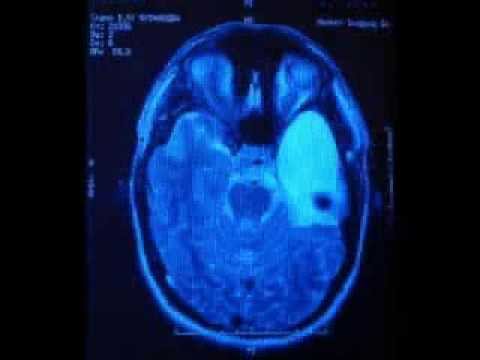
The study demonstrates that the same regions of the brain that become active in response to painful sensory experiences are activated during intense experiences of social rejection.

“These results give new meaning to the idea that social rejection ‘hurts’,” said University of Michigan social psychologist Ethan Kross, lead author of the article published in the Proceedings of the National Academy of Sciences. “On the surface, spilling a hot cup of coffee on yourself and thinking about how rejected you feel when you look at the picture of a person that you recently experienced an unwanted break-up with may seem to elicit very different types of pain.

“But this research shows that they may be even more similar than initially thought.”

Kross, an assistant professor at the U-M Department of Psychology and faculty associate at the U-M Institute for Social Research (ISR), conducted the study with U-M colleague Marc Berman, Columbia University’s Walter Mischel and Edward Smith, also affiliated with the New York State Psychiatric Institute, and with Tor Wager of the University of Colorado, Boulder.

While earlier research has shown that the same brain regions support the emotionally distressing feelings that accompany the experience of both physical pain and social rejection, the current study is the first known to establish that there is neural overlap between both of these experiences in brain regions that become active when people experience painful sensations in their body.

These regions are the secondary somatosensory cortex and the dorsal posterior insula.

For the study, the researchers recruited 40 people who experienced an unwanted romantic break-up within the past six months, and who indicated that thinking about their break-up experience led them to feel intensely rejected. Each participant completed two tasks in the study — one related to their feelings of rejection and the other to sensations of physical pain. Continue reading Study Illuminates the Pain of Social Rejection

A Comment on my Blog that needs promoting

A while back I received a comment on the article Four Reasons Bipolar is Accepted and Borderline Personality Disorder is Not that was apparently re-posted on a forum for people with BPD. It turns out that many of the people with BPD identified with this comment (more than my post actually). So, I thought I’d re-post this comment as a blog post so that people can read it (in a highlighted sort of way):

I do not think that lying and manipulation are part of this diagnosis. If they seem to be present, look either to another PD or to shame and anxiety as the cause, along with a long history of learning to never overtly state what you needed to be okay, or to express how rotten you felt, as the consequences always seemed to be much worse…

Sometimes it seems as if people hate those that are dx BPD precisely because they haven’t quite gone off the deep end for good. It’s bewildering how many professionals seem to resent them for this too.
They may curl up in a fetal position for hours, but then they will struggle out of bed and go on. They smile at us, while their inner world self-destructs. They might seem as alive as anyone, but -in the best of times- they feel dead inside; and as intelligent and gifted as many of them are, they never realize their full potential. But they would rather die than admit this to the outside world.

Who would today be dx’d BPD? Vincent Van Gogh, Kafka, Proust, Nathanial West, Sylvia Plath, Anne Sexton, Janis Joplin, Jim Morrison…

It’s ironic that they are so often seen as “emotional” when what they lack is a full nuanced range of emotions. Inner tension keeps anxiety coiled, emotionally stressful situations release it, and before they have a chance to think through what they feel, they are overwhelmed by fear and anger and despair. They get mired in their negativity. Studies have shown that those with BPD do not get angry more often than anyone else, but they have trouble leaving it behind when they do. And afterwards they drown in remorse, because these reactions are NOT felt to be syntonic. No one seems to pay much attention to this, but all other “personality disorders” are understood to be PD’s because they are syntonic with the personality. This is radically different in BPD.

That right there should raise lots of doubts about what this dx is. Is it part of the affective disorder spectrum? Is a akin to partial seizures in frontal lobe epilepsy? Is it a developmental disorder akin to autism? This is all possible, and perhaps BPD is a dx given to many different people who do not share underlying causes. This should at least stop us from quickly claiming that they CHOSE to feel the way they do. As if they were hell bent on living in hell…

When they do awkwardly, fearfully, try to communicate this pain, when they do reach out for help, they generally do so when their psyche is at it’s most shattered. They will quickly learn that their behavior is not acceptable to anyone. So they’ll go through DBT or through some other behavioral therapy, and sink into so much shame and guilt that lo and behold they will no longer qualify on the DSM for BPD; they will have learned to suffer in silence and to isolate (if they haven’t before – many of those with BPD will never consult a therapist in their lifetime and go through life pretty much invisible), learned to not bother anyone, but the dysthymia, the insomnia, and the dysphoria will still be there, eroding their lives, their aliveness. And as hard as they try, fear will still strike them out of the blue when they least expect it. As hard as they try, they will still plummet down into misery with the least negative emotion. Skinless creatures, they can not tune out human suffering, they can do nothing about the heightened sensitivity that they were born with. Only now no one will know. And so hopefully, thankfully, no one will ever call them “Borderline” again.


Ask Bon: Why does my loved one with BPD do such dangerous things? (like cutting, drugs, etc.)

People with BPD are in a great deal of emotional pain. Since emotions are immediate and primal, emotional pain is also immediate and primal. As I have said, emotions represent a land-bridge between the body and the mind. Emotional pain manifests itself in both mental and physical ways. If you have ever been depressed or “fraught with grief” over the loss of something or someone important to you, you will know what I am saying in this regard.

Depression and grief can be a trying experience for anyone. You feel pain in every area of your body and mind. Sometimes you will just want to retreat to your bedroom and go to sleep for hours, just to get some relief from the physical and mental anguish you feel. The sleep represents a distraction of both the mind and the body from the experience of complete pain. You might also use alcohol to relieve the pain by “turning off your mind.” Many people “drink themselves into a stupor” and, in doing so, extinguish the pain for a short period. Pain-killers, whether over-the-counter or prescription, can also remove pain by working on the pain at its source (in the brain where pain is actually felt). Once, when I was asked by one of my daughters about how the Tylenol knew to go to her foot (which was in pain), rather than to her head (because she’d taken it for headaches before), I explained that it acts in the brain where she feels the pain, not where the pain actually “is.” In the case of emotional pain, the pain seems to be both in the body and in the mind, but the pain-feeling area of the brain is where these drugs act. See below about substance abuse.

People with BPD are likely to feel emotional pain many times a day every day. Since these emotions are basic (like fear, sadness and anger) the reactions to them are both physical and mental. These emotional pain-states are powerful and have the ability to overpower rational thinking. When you are in pain, regardless of the source, the main reaction of the body and mind is to get out of or to relieve the pain as soon as possible and by whatever means necessary.  I used the example of someone who is literally on fire. This person will try to douse the flames in any way, without thinking about the people around her and what harm may come to others if the flames spread. This situation is analogous to a person in deep emotional pain. The person will do anything to stop the pain, which is why my Internet site and Internet list are called “anything to stop the pain” (ATSTP). This “anything” includes self-destructive and relationship-damaging behaviors. Continue reading Ask Bon: Why does my loved one with BPD do such dangerous things? (like cutting, drugs, etc.)

Could this be the first medication for Borderline Personality Disorder?

With a debt of u-opiods and over active u-opiod receptors, could this be the first medication for BPD? I am not a doctor yet when I saw this on twitter I immediately thought of Borderline Personality Disorder:

Extended-Release Opioid Gets FDA OK

By Emily P. Walker, Washington Correspondent, MedPage Today

Reviewed by August 26, 2011   Review

WASHINGTON — The FDA has approved tapentadol (Nucynta), an extended-release oral opioid, to treat severe chronic pain.

The agency first approved the drug for relief of moderate to severe acute pain in 2008. Friday’s approval is for an extended-release pill that chronic pain patients can take twice daily.

The approval is based on a randomized, double-blind, controlled phase III study that tested tapentadol as a treatment for moderate to severe low-back pain and diabetic peripheral neuropathy.

Safety was evaluated in 1,100 patients with moderate to severe chronic pain over a one-year period. The drug was found to be safe and effective, according to the company that makes tapentadol, Janssen Pharmaceuticals, a unit of Johnson & Johnson.
Tapentadol was also well-tolerated, the company said. Opioids can cause a number of side effects, including constipation, that may cause patients to discontinue their use.

A 2010 phase III study comparing the drug to oxycodone in patients with painful knee osteoarthritis found that tapentadol provided effective pain relief with fewer of the gastrointestinal side effects seen with oxycodone.

“Chronic pain is difficult to manage, and even with the treatments available today, it can be a challenge to balance pain relief with a patient’s ability to tolerate the medicine,” Sunil Panchal, MD, president of National Institute of Pain, said in a press release from Janssen. “People with chronic pain will continue to need additional options, so an approval like this is welcome news for this community and the people who suffer from this often debilitating condition.”

The approval also comes with a Risk Evaluation and Mitigation Strategy (REMS), similar those approved for other opioids, meant to educate prescribers about the potential of abuse, misuse, overdose, and addiction with extended-release tapentadol.
The CDC estimates that 42 million Americans over the age of 20 suffer from chronic pain.

Neurobiology and the Psychic Pain that is BPD

An article about the opioid system and the neurobiology of borderline personality disorder.

Neurobiology Informs Successful Psychotherapy for BPD

Mark Moran

A common feature of all psychotherapies for borderline personality disorder is activation of the prefrontal cortex through reappraisal of painful affect states generated by a hyperactive amygdala.

Neurobiological research can help psychotherapists tailor talking therapies to the individual characteristics of patients with borderline personality disorder (BPD).

That’s what Glen Gabbard, M.D., told psychiatrists at this year’s APA annual meeting in Honolulu in an address titled, “Neurobiologically Informed Psychotherapy of Borderline Personality Disorder.”

A prominent psychoanalyst and psychodynamic therapist, Gabbard said he believes the theoretical constructs of psychoanalysis—drives and conflicts—find expression in, and can be interpreted within, a patient’s individual neurobiology. “You can see psychoanalytic meaning at the same time you are looking at biology,” he said. “This was the dream of Freud, to build bridges between psychoanalytic concepts and a neurobiological science of the brain.”

He is the Brown Foundation Professor of Psychoanalysis and professor and director of the Baylor Psychiatry Clinic.

In the case of BPD, Gabbard stressed the role of hyper-reactivity of the amygdala, and a corresponding inactivity of the prefrontal cortex, as well as emerging evidence that patients with BPD have an opioid deficiency. These neurobiological characteristics account for the emotional dysregulation and impulsivity common in BPD (see Key Points Concerning Neurobiology and Psychotherapy for BPD).


Key Points Concerning Neurobiology and Psychotherapy for BPD
There are common therapeutic elements in all of the psychotherapies for BPD, most notably activation of the prefrontal cortex to bring “thinking” to bear on unbearable affects produced by amygdala hypersensitivity. 

An opioid deficit appears to be prominent in BPD. Patients with BPD

○ have difficulty deriving satisfaction from intimate relationships,

○ often say they experience emotional pain as physical pain,

○ often resort to cutting themselves for release of endogenous opioids,

○ show a high rate of opioid abuse.

Neurobiological research can help clinicians tailor psychotherapies to the needs of individual patients. Some evidence has emerged indicating that BPD patients with dissociative symptoms may not respond as well to dialectical behavior therapy as other patients, suggesting that other treatments may be needed for this subgroup.


“What’s exciting to me is that the neurobiological research gives us an opportunity to get more specific about tailoring psychotherapies to specific borderline patients,” Gabbard said. “There is a spectrum to BPD, and one of the principles we learn in medical school is to adjust the treatment to the patient, not the patient to the treatment.

“Our psychotherapeutic theories are often like churches or belief systems, and the more we can get science involved in knowing how to tailor therapies to the individual’s neurobiology, the more we are a science rather than a religion.”

He noted, as an example, that recent research indicates that BPD patients with dissociative symptoms may not respond as well to dialectical behavior therapy, suggesting that this subgroup of patients may need to be treated with a different approach.

Gabbard said the psychotherapies that have been proven effective in the treatment of BPD probably all “speak” to common neurobiological processes, but one especially prominent feature is the activation of the prefrontal cortex through active reappraisal of emotions generated by an overactive amygdala. “A feature common to all of the therapies is the emphasis on self-reflection and mindfulness in which one is trying to look inward and manage painful affect states,” he said. “If you are actively reappraising, that appears to cause activation of the prefrontal cortex, which then modulates the amygdala” (Psychiatric News, April 1).

And he added that patients will often experience emotional pain in a physical way that is unbearable. Research by Prossin and colleagues published in the American Journal of Psychiatry in May 2010 implicates an opioid deficiency in BPD, possibly accounting for the high rate of opioid abuse among patients, as well as the high number of borderline patients among those who seek out opioids from physicians and hospitals or from illicit sources. And it is likely that the phenomenon of “self-cutting,” so common in borderline patients, is related to the release of endogenous opioids that accompanies cutting.

“Opioids are involved in emotion regulation and social functioning, so it makes conceptual sense that deficits in endogenous opioids could be related to the ubiquitous dysfunction in social and interpersonal relationships,” he said.

Also intriguing is the fact that patients with BPD report feeling euthymic—as opposed to euphoric—when using opioids, suggesting the neurobiologically determined difficulty they may have experiencing pleasure.

“This means satisfaction in intimacy is going to be challenging and is linked to the insecure attachment that patients experience over and over,” Gabbard said. “So when we see these people having difficulty forming a therapeutic alliance, it is so important that therapists not think of them as ‘difficult’ or ‘bad’ patients, but as people who are struggling with a biological deficit they are trying to overcome in order to link up with someone in a way they may never have experienced.”

Understanding Emotional Agony Through David Foster Wallace’s Eyes

Here is a quote from Infinite Jest about “depression” or the “Great White Shark of Pain”. I think it helps illustrate the difference between the chronically depressed and those in emotional agony. I see that people with borderline personality disorder are more likely to be in the second category. I have bolded some key points here. The “suicide contract” is exactly the same as a “behavior contract”. With a person in this much pain, it ain’t gonna work.

That dead-eyed anhedonia is but a remora on the ventral flank of the true predator, the Great White Shark of pain. Authorities term this depression clinical depression or involuntary depression or unipolar dysphoria. Instead of just an incapacity for feeling, a deadening of soul, the predator-grade depression Kate Gompert always feels as she Withdraws from secret marijuana is itself a feeling. It goes by many names — anguish, despair, torment, or q.v. Burton’s melancholia or Yevtuschenko’s more authoritative psychotic depression — but Kate Gompert, down in the trenches with the thing itself, knows it simply as It.

It is a level of psychic pain wholly incompatible with human life as we know it. It is a sense of radical and thoroughgoing evil not just as a feature but as the essence of conscious existence. It is a sense of poisoning that pervades the self at the self’s most elementary levels. It is a nausea of the cells and soul. It is an unnumb intuition in which the world is fully rich and animate and un-map-like and also thoroughly painful and malignant and antagonistic to the self, which depressed self It billows on and coagulates around and wraps in Its black folds and absorbs into Itself, so that an almost mystical unity is achieved with a world every constituent of which means painful harm to the self. Its emotional character, the feeling Gompert describes It as, is probably mostly indescribable except as a sort of double bind in which any/all of the alternatives we associate with human agency — sitting or standing, doing or resting, speaking or keeping silent, living or dying — are not just unpleasant but literally horrible.

It is also lonely on a level that cannot be conveyed. There is no way Kate Gompert could ever even begin to make someone else understand what clinical depression feels like, not even another person who is herself clinically depressed, because a person in such a state is incapable of empathy with any other living thing. This anhedonic Inability To Identify is also an integral part of It. If a person in physical pain has a hard time attending to anything except that pain [(the big reason why people in pain are so self-absorbed and unpleasant to be around)], a clinically depressed person cannot even perceive any other person or thing as independent of the universal pain that is digesting her cell by cell. Everything is part of the problem, and there is no solution. It is a hell for one.

The authoritative term psychotic depression makes Kate Gompert feel especially lonely. Specifically the psychotic part. Think of it this way. Two people are screaming in pain. One of them is being tortured with electric current. The other is not. The screamer who’s being tortured with electric current is not psychotic: her screams are circumstantially appropriate. The screaming person who’s not being tortured, however, is psychotic, since the outside parties making the diagnosis can see no electrodes or measurable amperage. One of the least pleasant things about being psychotically depressed on a ward full of psychotically depressed patients is coming to see that none of them is really psychotic, that their screams are entirely appropriate to certain circumstances part of whose special charm is that they are undetectable by any outside party. Thus the loneliness: it’s a closed circuit: the current is both applied and received from within.

The so-called ‘psychotically depressed’ person who tries to kill herself doesn’t do so out of quote ‘hopelessness’ or any abstract conviction that life’s assets and debits do not square. And surely not because death suddenly seems more appealing. The person in whom Its invisible agony reaches a certain unendurable level will kill herself the same way a trapped person will eventually jump from the window of a burning high-rise. Make no mistake about people who jump from burning windows. Their terror of falling from a great height is still just as great as it would be for you or me standing speculatively at the same window just checking out the view; i.e. the fear of falling remains a constant. The variable here is the other terror, the fire’s flames: when the flames get close enough, falling to death becomes the slightly less terrible of two terrors. It’s not desiring the fall; it’s terror of the flames. And yet nobody down on the sidewalk, looking up and yelling ‘Don’t!’ and ‘Hang on!’, can understand the jump. Not really. You’d have to have personally been trapped and felt flames to really understand a terror way beyond falling.

But and so the idea of a person in the grip of It being bound by a ‘Suicide Contract’ some well-meaning Substance-abuse halfway house makes her sign is simply absurd. Because such a contract will constrain such a person only until the exact psychic circumstances that made the contract necessary in the first place assert themselves, invisibly and indescribably. That the well-meaning halfway house Staff does not understand Its overriding terror will only make the depressed resident feel more alone.


Infinite Jest (Paperback)

By (author) David Foster Wallace

List Price: $17.99 USD
New From: $9.37 In Stock
Used from: $6.66 In Stock

Missouri swimmer’s suicide might draw attention to disorder

Article about a University of Missouri swimmer who committed suicide. She had BPD. Sad, sad.

Missouri swimmer’s suicide might draw attention to disorder

By DAVID BRIGGS
Sunday, July 3, 2011

Sasha Menu Courey loved college life at Missouri.

She was a swimmer with Olympic ambitions but rarely missed a chance to set free a laugh so booming that it seemed to rattle the ceiling of teammates a floor below at Johnston Hall. The sophomore greeted friends — everybody counted as one — as if they were just the person she was hoping to see.

“It was always, ‘Heyyy!’ ” said MU swimmer Caitlin Connor, who met Menu Courey before a home football game their freshman year when she and her roommate from 233 Johnston searched out the source of the bursting cheer in Room 333. “She would talk to you like she had known you her whole life.”

In the classroom, Menu Courey earned a 4.0 GPA her first semester and was already planning for graduate school. The aspiring psychologist had lined up a prestigious internship this summer researching treatment for alcoholism.

“Everything she touched,” said her mother, Lynn Courey, “she was doing great.”

But this spring, Menu Courey fell into the grip of an illness she had kept hidden from the world.

Menu Courey committed suicide June 17 in a suburban Boston hospital. She was 20.

When a series of events one friend described as the “perfect storm” reached a crest, she slipped into a deep depression from which she would never escape.

Menu Courey left the team on March 21. She spent the next 10 days under watch and treatment at the MU Psychiatric Center, where her parents said she was diagnosed with borderline personality disorder, an illness characterized by extreme emotional instability.

Lynn flew in from the family’s Toronto home to be with her daughter when she was released. By then, however, she said she no longer recognized Sasha. Though Sasha often put on a cheerful front to keep friends and family from worrying, she bore an emotional pain too great to endure.

“We have difficulty understanding, as well, what happened,” Lynn said. “My daughter really had a great will to live, and suddenly she had a will to die.”

Now, Menu Courey’s family is celebrating a life that brought joy to so many while searching for answers and striving to raise awareness of a disorder they knew little about until it was too late. Continue reading Missouri swimmer’s suicide might draw attention to disorder

I-AM-MAD Skill makes it to Partners in Wellness Blog

In the post “When Your Partner Says They Are In Pain, Validate” Kate Theda of the “Partners in Wellness” blog specifically used my I-AM-MAD communication skill to teach her readers about validation. Here is the intro for the log post:

After a period of dealing with a partner’s mental illness, compassion fatigue can set in. Yes, you still love your partner. Yes, you still care that they are not feeling well. But it can become difficult to empathize after a while, and you begin to wonder, “When is this going to end?”

While I can’t give you an answer on when–or if–the illness will abate, what I can tell you is that it is essential that if your partner says they are in pain, believe them. The pain could be emotional or physical, and either way, it is valid.

I could not agree more with that statement. Pain hurts even if he seems to you (the partner) as if it shouldn’t.

I wanted to thank Ms. Theda for sharing my tool with her readers. I’d encourage my readers to read her post. I’d also encourage you to check out the Emotional Validation Spotlight.

Confirmation of IAAHF

A few days ago, I saw some confirmation of “it’s all about his/her feelings” come across the ATSTP Email Support List. A woman who has been a member for a while posted this about her husband with BPD:

When I asked my H why he thinks he would never fall back on his old ‘opiate’ (other women) he said this:  “because I realized it only made me feel sh*ttier about myself and fall into a dark and self-loathing place, feeling that way is the ugliest experience I’ve ever had – and I felt that way for too long.”
I didn’t like that answer at first.  I wanted to hear “because it was heinous of me to betray you – *you* didn’t deserve that, how could I be such a self-centered so and so…” any combination of that – was what I wanted – I wanted it to be about *me*.  Inevitably that stuff came out – but his main and true motivator is himself.  And that is what keeps him in an ‘effective behavior’ stance.
As you can see, there are two interesting notes in that post – one that it’s all about his feelings (IAAHF) and secondly that she didn’t want to accept that it was not about her feelings. Tough thing to face, but at some point, it’s more effective to accept that the motivation is IAAHF and, more so, that that’s the motivation that will have the biggest impact on an emotionally sensitive person.

First Search on IAAHF

I coined the phrase “It’s All About His/Her Feelings” (IAAHF) as a mentalization tool to understand the MOTIVATION behind much of the confusing behavior of those with BPD. Last week, I got the first search engine search on IAAHF. See below:

IAAHF

As you can see, I also get lots of searches on “famous people” or “celebrities” with BPD. I only post those types of articles to relate to those with BPD and their families that perhaps they are not alone in their struggles – perhaps (again it’s a maybe because the closest celebrity to actually come out and say he/she has BPD is Megan Fox – who speculated about it).

I’ve written a lot about IAAHF here. I also explain the concept and how it relates to validation skills in the I-AM-MAD communication skill. The concept of IAAHF is extremely important to fully understand if a non-BPD is going to understand what is going on in the emotionally dysregulated moments (EDMs). It takes some time to understand and to truly “get” it. For me, it was one to the most valuable perspectives on BPD and emotional dysregulation.

Sometimes, however, nons have a problem with this concept because they misinterpret it. Here is a brief note from “When Hope is Not Enough” (the second edition, on which I am working) about IAAHF:

I found that many people bristle at the idea that it’s “all about” the borderline’s feelings. Sometimes this formulation makes the Non-BPD’s ask: what about my feelings? (which, in a way, is a reformulation of “what about me?”). The intention of this concept is for you to understand the motivation of behavior, not the entire landscape of the relationship. There will be times in which the context of the relationship is about your feelings. Yet, when the “crazy” behavior takes place, it is most often motivated by dysregulated feelings and emotions. The purpose and intent of the behavior is to quell those feelings, even if it seems as if it’s your fault that those feelings exist. To understand and use this attitude properly, you have to remember that it’s (the behavior) is all about (motivated by) his/her feelings (dysregulated emotions that require calming/quelling of pain).